
Petro-Chem, Coolant and Asphalt Testing Baths — Copper Corrosion, Density, Coolant, and Asphalt Binder Instruments
KB Scientific Instruments supplies the complete Tamson bath line for petroleum, coolant, and asphalt density and corrosion testing, covering copper corrosion in aromatic hydrocarbons and LPG, hydrometer density measurement, engine coolant corrosion, viscous material density by Bingham pycnometer, and semi-solid asphalt binder density. Each bath is purpose-built to its governing ASTM method and ready to configure for a specific laboratory workflow. All instruments ship from an authorized Tamson representative based in the Midwest.
Download Brochure
Purpose-Built Baths for Petroleum, Coolant, and Asphalt Testing
Petroleum, coolant, and asphalt testing laboratories run a wide range of methods that characterize copper corrosivity, product density, coolant performance, and asphalt binder properties. Each method calls for a bath engineered around a specific sample type, temperature range, and glassware configuration, and substituting a general-purpose bath typically compromises repeatability. This instrument line addresses six of the most commonly required methods with dedicated Tamson apparatus.
The line divides into two functional groups. Petro-Chem testing covers copper corrosion in aromatic hydrocarbons and liquefied petroleum gases, hydrometer-based density measurement of crude and petroleum products, engine coolant corrosion evaluation, and viscous material density by Bingham pycnometer. Asphalt testing covers the density and specific gravity of semi-solid asphalt binder, asphalt cements, and soft tar pitches.
Refinery quality control laboratories, coolant formulators, asphalt producers, and independent petroleum testing laboratories rely on this instrument line to move directly from sample intake to method-compliant results without reconfiguring shared equipment between test types.
Built for Method-Compliant, Repeatable Petroleum, Coolant, and Asphalt Results
Shared TC40 Bath Platform Across Corrosion Methods
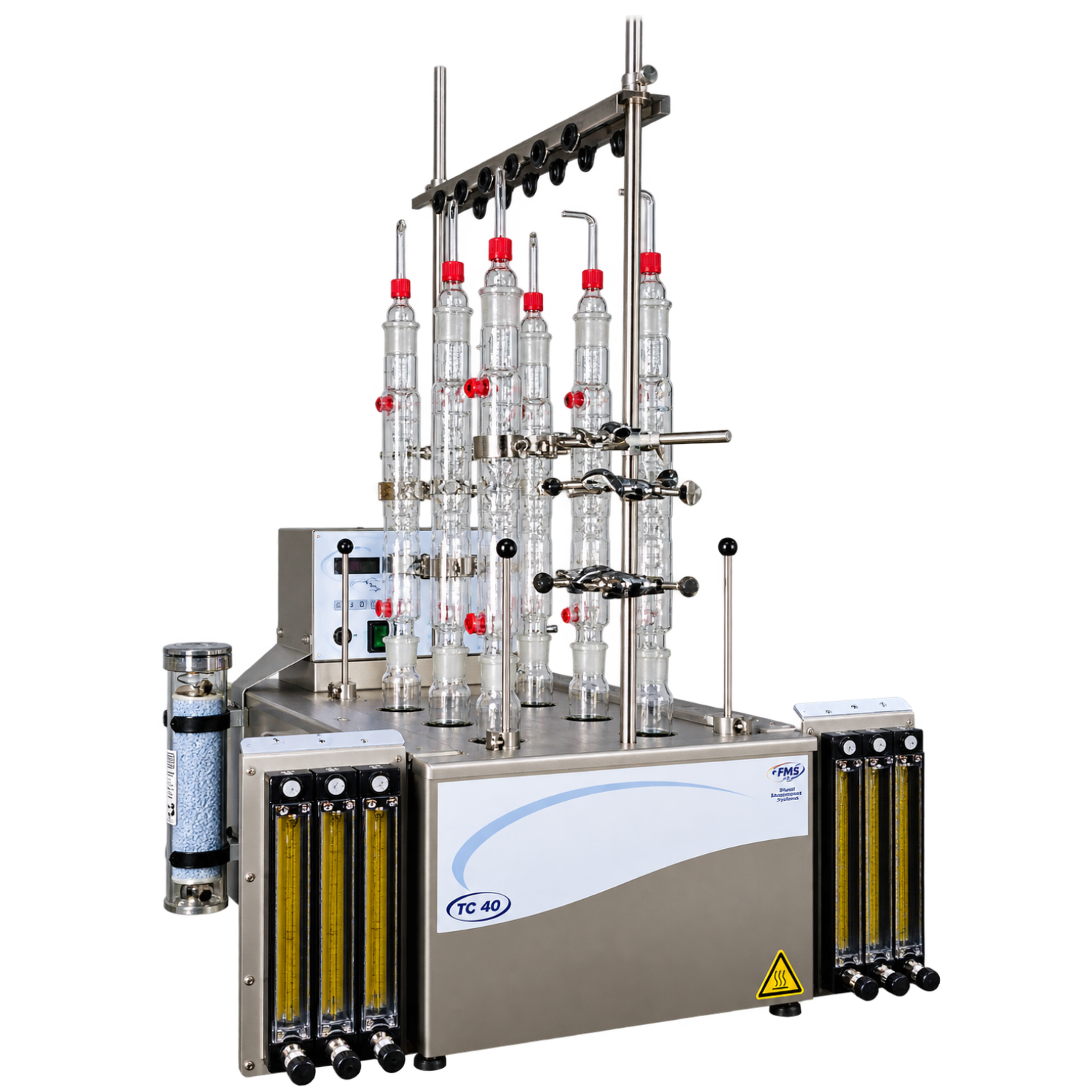
The TC40 circulator bath used for ASTM D849 copper corrosion testing is the same platform used for ASTM D1384 engine coolant corrosion testing, each configured with a method-specific top cover and glassware set. Both configurations share a 40 L bath volume, a working range of ambient +5°C to 250°C, and stability of ±0.02°C. A laboratory running both methods benefits from a single bath platform and a common set of spare parts.
Six-Position Design Across Every Bath in This Line
The D849, D1384, and D1838 baths each hold six positions, and the D70 bath holds up to nine pycnometer positions across three brackets. This consistent multi-position design lets a single technician run a full batch of samples per heating cycle rather than processing specimens one at a time, reducing total turnaround time on high-volume testing days.
Purpose-Built Hydrometer Rack for Fast, Clean Density Readings
The ASTM D1298 apparatus pairs three jacketed glass cylinders with a TLC15-5 refrigerated circulator that holds the bath within ±0.25°C of the test temperature. PTFE valves allow fast drainage and cleaning between samples, and a detachable spill tray keeps the workbench clean during hydrometer readings.
Dedicated LPG Corrosion Bath Rated for Sustained Pressure
The ASTM D1838 TB30 bath holds a stable 37.8°C without an external cooling circulator and accommodates up to four LPG corrosion test cylinders at once. Each corrosion test cylinder ships with a works certificate confirming it withstands a hydrostatic test pressure of 6900 kPa and remains leak-free at 3450 kPa.
Ultra-Precise Visibility Bath for Viscous Material Density
The ASTM D1480 TV12 bath achieves an overall system accuracy within ±0.005°C using a vane-type stirrer and baffle plate design that directs bath fluid past the heater for excellent temperature uniformity. A double-pane tempered safety glass window and internal LED light keep all four Bingham pycnometer positions visible throughout the test.
Method-Flexible Asphalt Bracket System
The ASTM D70 TC16 bath accepts interchangeable brackets for either Hubbard or Gay-Lussac pycnometers, with each bracket holding three pycnometers and up to three brackets per bath. An external TLC15-5 circulator extends the bath below ambient temperature for tests that call for a 15°C or 25°C test point.
ASTM METHODS
Methods Supported by This Instrument Line
Corrosiveness to Copper from Industrial Aromatic Hydrocarbons
This method covers the detection of the corrosiveness to copper from aromatic hydrocarbons using a six-position TC40 circulator bath delivered with six sets of glassware. The bath maintains the required test temperature between ambient +5°C and 250°C with a stability of ±0.02°C. Each of the six bath openings uses a lid and stand-rod with clamps to hold the flask and condenser in a fixed position throughout the test.
Density Measurement of Petroleum Products by Hydrometer Method
This method covers the laboratory determination of density, relative density, or API gravity of crude petroleum and liquid petroleum products using a glass hydrometer. The apparatus is also validated for ASTM D287, D1429 test method D, IP 160, API 2547, ASTM D3142, ASTM D6822, and ISO 3675. Products tested under this method must have a Reid vapor pressure of 14.696 psi or less.
Corrosion Test for Engine Coolants in Glassware
This method covers a beaker-type procedure for evaluating the effects of engine coolants on metal specimens under controlled laboratory conditions. Specimens typical of those present in engine coolant solutions are totally immersed in aerated engine coolant solutions for 336 hours at 88°C. The same apparatus platform also supports ASTM D7935, D8040, D8485, and SH/T0085.
Density and Relative Density (Specific Gravity) of Viscous Materials
This method covers the measurement of density for materials that are fluid at the desired test temperature, restricted to liquids of vapor pressure below 80 kPa and viscosity below 40,000 mm²/s. The liquid sample is introduced into a Bingham pycnometer, equilibrated to the desired temperature, and weighed, with the density calculated from the weight and a previously determined calibration factor. The same apparatus is also validated for ASTM D1217.
Corrosiveness to Copper of Liquefied Petroleum Gases
This method covers the detection of the corrosiveness to copper of liquefied petroleum gases using a polished copper strip immersed in approximately 100 mL of sample. The sample is exposed at 37.8°C for one hour in a cylinder of suitable working pressure, after which the copper strip is rated against the four classifications of the ASTM copper corrosion standard. This method also aligns with EN/ISO 6251, IP 411, BS 2000 Part 411, BS 6924, and NF M41-007.
Density of Semi-Solid Asphalt Binder
This method covers the determination of relative density and density of semi-solid asphalt binder, asphalt cements, and soft tar pitches using a calibrated pycnometer. The pycnometer and sample are weighed, the remaining volume is filled with water, and the filled pycnometer is brought to test temperature and weighed again. The same apparatus also supports ASTM D1429 test method A.
Additional Applications
Choose the Instrument for Your Test Method
The Tamson ASTM D849 apparatus consists of a robust six-position TC40 circulator bath
Delivered with six sets of glassware, a lid, and stand-rods with clamps to hold the glassware in position. The bath conforms to CE regulation and is equipped with a mechanical resettable safety thermostat.
Bath volume: 40 L
Range: Ambient +5°C to 250°C
Stability: ±0.02°C
Power: 3.0 kW
00T2015 (230V, 50-60Hz apparatus with glassware)
00T2016 (115V, 60Hz apparatus with glassware)
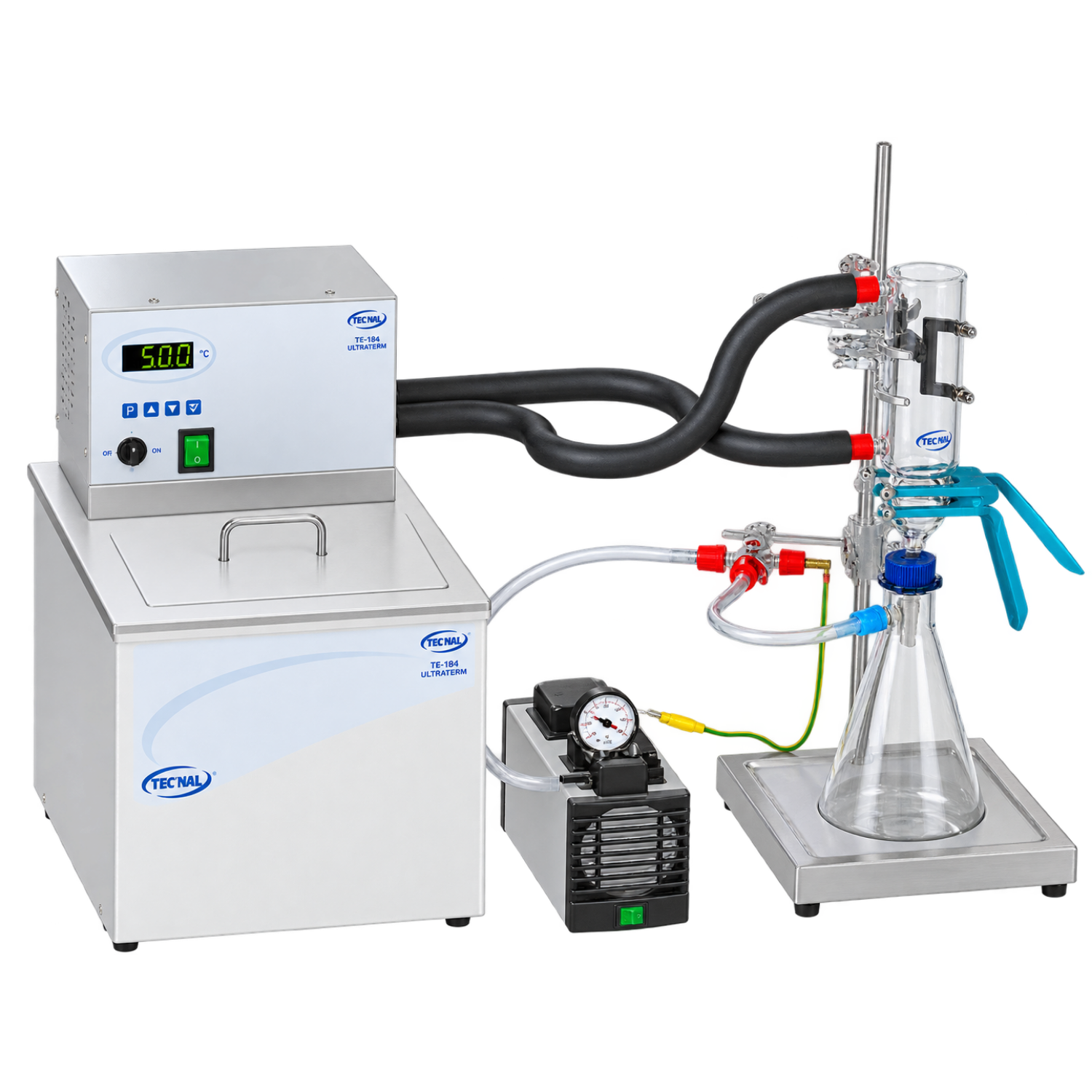
The Tamson ASTM D1298 apparatus is equipped with three jacketed cylinders
In a convenient rack and a TLC15-5 refrigerated circulator. The rack offers a full view of the hydrometer, and PTFE valves ensure fast drainage and cleaning of the tube between samples.
Bath volume: 5 L
Opening bath: 85 x 150 mm
Accuracy: keeps sample within ±0.25°C of test temperature
Power: 1100 W
00T2000 (230V, 50Hz)
00T2001 (230V, 60Hz)
00T2002 (115V, 60Hz)
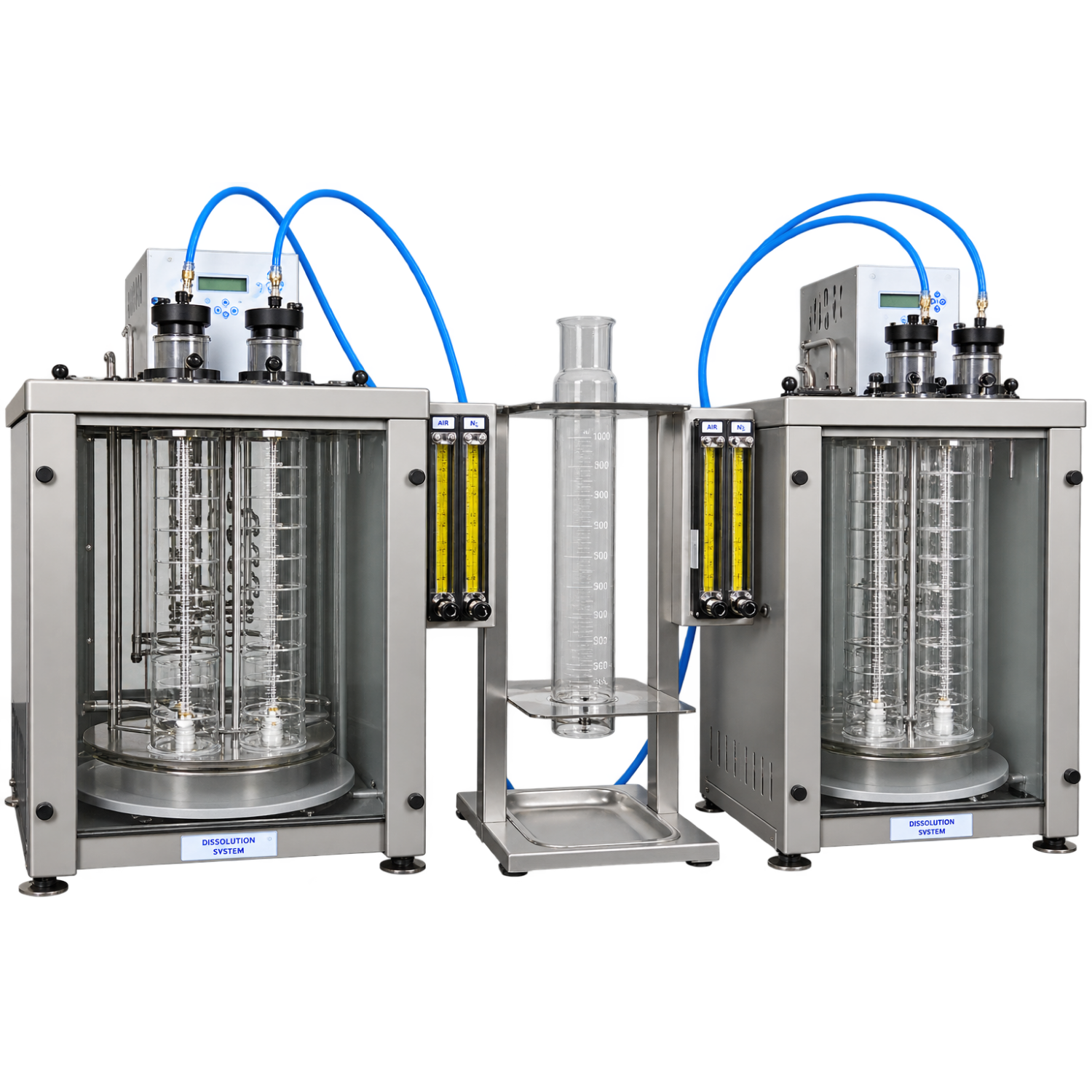
The Tamson ASTM D1384 apparatus is a six-position TC40 bath
Delivered with six sets of all-glass 1000 mL containers, stand-rods with clamps, flowmeters, and tubing. The apparatus should be placed in a fume hood to avoid oil vapors spreading into the laboratory, and a low liquid float switches off the apparatus when bath fluid runs low.
Bath volume: 5 L
Opening bath: 85 x 150 mm
Accuracy: keeps sample within ±0.25°C of test temperature
Power: 1100 W
00T2000 (230V, 50Hz)
00T2001 (230V, 60Hz)
00T2002 (115V, 60Hz)
The Tamson ASTM D1384 apparatus is a six-position TC40 bath
Delivered with six sets of all-glass 1000 mL containers, stand-rods with clamps, flowmeters, and tubing. The apparatus should be placed in a fume hood to avoid oil vapors spreading into the laboratory, and a low liquid float switches off the apparatus when bath fluid runs low.
Bath volume: 12–15 L
Range: ambient +5°C to 120°C
Accuracy: within ±0.005°C
Power: 0.2–1.3 kW max
00T0400 (230V, 50-60Hz)
00T0405 (115V, 60Hz)
The Tamson TB30 bath is designed to hold a stable 37.8°C
Without an external cooling circulator and accommodates up to four LPG corrosion test cylinders in an upright position. The corrosion test cylinders are supplied with a works certificate confirming pressure testing to 6900 kPa.
Bath volume: 30 L
Range: Ambient to 80°C (176°F)
Stability: ±0.02°C
Power: 2.9 kW
00T0065 (230V, 50-60Hz)
00T0066 (115V, 60Hz)
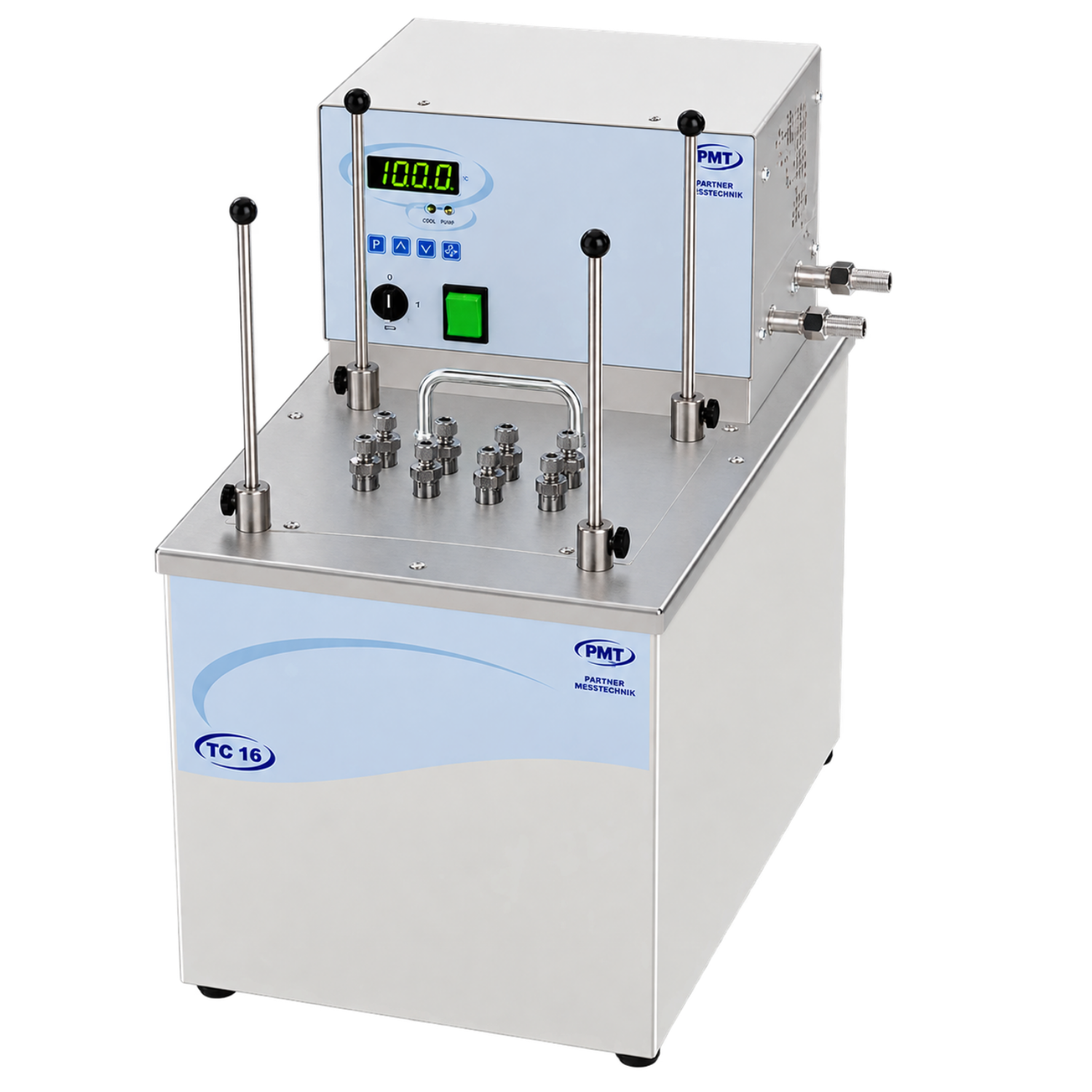
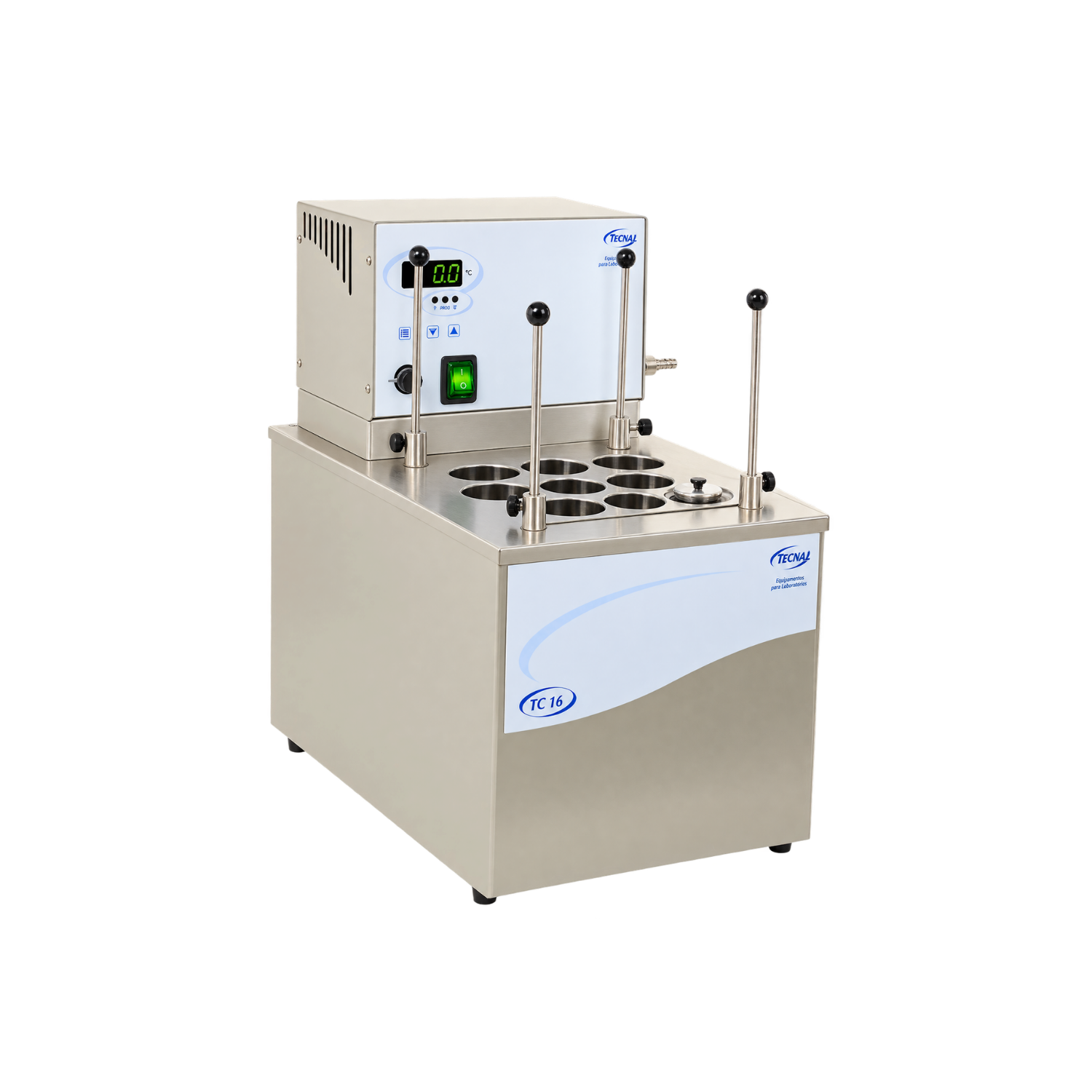
The Tamson TC16 bath determines the density, specific gravity, and relative density of semi-solid asphalt binder
Asphalt cements, and soft tar pitches by use of a pycnometer. The bath holds up to nine pycnometers across interchangeable brackets for either Hubbard or Gay-Lussac types, and an external TLC15-5 circulator extends operation to 15°C or 25°C test points.
Bath volume: 16 L
Range: Ambient +5°C to 250°C
Stability: ±0.02°C
Power: 1.5 kW
00T0671 (230V, 50-60Hz)
00T0861 (115V, 60Hz)
Specifications at a Glance
Range
Range
Range
Range
The same TC40 platform, reconfigured with method-specific covers and glassware, supports both ASTM D849 copper corrosion and ASTM D1384 engine coolant corrosion testing.
The TV12 and TC16 baths use pycnometer holders rather than hydrometers, extending density measurement to viscous liquids and semi-solid asphalt binder that hydrometers cannot handle.
Stability
30 L
D70 Asphalt Binder Density
16 L
Who Uses This Instrument Line
Who Uses This Instrument Line
Refinery QC labs use the D849 and D1838 baths for copper corrosion screening on crude and LPG streams, alongside the D1298 hydrometer apparatus for routine density checks across the production line.
Crude Oil Production & Terminal Operations
Crude oil terminals and gathering facilities use the D1298 hydrometer apparatus to verify API gravity at custody transfer points and the D849 apparatus to confirm copper corrosivity ahead of shipment.
Coolant and Antifreeze Manufacturing
Coolant formulators use the D1384 apparatus to evaluate corrosion-inhibitive properties of engine coolant solutions against metal specimens under the 336-hour aerated test protocol.
LPG Distribution and Cylinder Testing
LPG distributors and cylinder testing facilities use the D1838 TB30 bath to confirm copper corrosivity of liquefied petroleum gas samples ahead of distribution.
Specialty Chemical and Viscous Fluid Testing
Laboratories testing viscous fluids that cannot be measured by hydrometer due to slow flow or air entrapment use the D1480 TV12 apparatus with Bingham pycnometers for accurate density results.
Asphalt and Paving Materials Producers
Asphalt producers and paving materials laboratories use the D70 TC16 apparatus to determine the density and specific gravity of semi-solid asphalt binder, asphalt cements, and soft tar pitches.
Your Authorized Tamson Partner in the Midwest
Three things that set sourcing this instrument line through KB Scientific apart from buying direct or through a general lab supply distributor.
Authorized Tamson Representative
As an authorized Tamson representative, KB Scientific Instruments maintains a direct line to Tamson engineering for configuration questions, replacement parts, and warranty support across every bath in this line.
Method-Matched Configuration Guidance
Every inquiry starts with identifying the governing ASTM method and the sample type a laboratory tests, so the quoted apparatus, glassware, and accessories match the exact test requirement on the first order.
Local Midwest Support
Being Midwest-based allows KB Scientific to support installation, commissioning, and ongoing accessory ordering with shorter lead times than an overseas or coastal-only distributor.
Frequently Asked
Questions
What refinery QC analysts, coolant formulators, and asphalt producers ask most often about this instrument line.
Can the same TC40 bath be used for both D849 and D1384 testing?
Yes, the TC40 platform is shared across the ASTM D849 copper corrosion test and the ASTM D1384 engine coolant corrosion test. Each method requires its own top cover and glassware set, since the D849 configuration uses a flask and condenser while the D1384 configuration uses 1000 mL all-glass containers with an aerator tube. The underlying bath, heater, and pump are identical between the two configurations. Ordering both configurations lets a laboratory standardize on a single bath platform for spare parts and training.
Does the D1298 hydrometer apparatus include the hydrometer itself?
The base D1298 apparatus P/N 00T2000, 00T2001, or 00T2002 includes the TLC15-5 circulator, three jacketed glass cylinders, and rack, but hydrometers are ordered separately according to the expected density range of the sample. Hydrometers are available in multiple reference temperature and scale options conforming to BS 718 or DIN 12791. A laboratory testing a wide density range typically stocks several hydrometer part numbers to cover the full measurement span. KB Scientific can confirm the correct hydrometer part numbers once the expected sample density range is known.
How many LPG cylinders can the D1838 bath test at one time?
The TB30 bath is designed to hold up to four LPG corrosion test cylinders in an upright position for a single 37.8°C test cycle. Each corrosion test cylinder is manufactured by Tamson and ships with a works certificate confirming the cylinder withstands a minimum pressure of 6900 kPa and remains leak-free at 3450 kPa. Running fewer than four cylinders per cycle is acceptable and does not affect bath performance. A laboratory with higher throughput needs can order a second TB30 bath to run parallel batches.
What makes the D1480 TV12 bath more accurate than a standard heated bath?
The TV12 achieves an overall system accuracy within ±0.005°C using a vane-type stirrer that directs bath fluid past a dedicated heater and baffle plate for uniform temperature distribution. This level of accuracy matters for viscous materials tested by Bingham pycnometer, since even small temperature deviations shift the measured density outside the method’s required tolerance. The bath’s double-pane tempered safety glass window and internal LED light also let a technician visually confirm the pycnometer is properly equilibrated before recording a reading. Standard heated baths without this stirring and windowed design typically cannot hold the same tolerance.
Can the D70 asphalt bath use both Hubbard and Gay-Lussac pycnometers?
The TC16 bath accepts brackets for either Hubbard or Gay-Lussac pycnometers, but a laboratory needs to purchase the bracket type matching the pycnometer style it uses, since each bracket is designed for one pycnometer type only. Each bracket holds three pycnometers, and up to three brackets fit in a single TC16 bath for a maximum of nine pycnometers per test cycle. A ridge accessory must also be mounted on the TC16 to support the adjustable brackets before either bracket type can be installed. KB Scientific can confirm which pycnometer style a laboratory’s governing specification calls for before quoting bracket part numbers.
Is an external circulator required for every instrument in this line?
An external circulator is required for the D1298 apparatus, which uses the TLC15-5 as its primary bath circulator rather than an accessory, and is optional for the D70 apparatus, which only needs the external TLC15-5 to reach 15°C or 25°C test points below or near ambient temperature. The D849, D1384, D1480, and D1838 baths operate as self-contained heated systems and do not require an external circulator for their standard test temperatures. A laboratory running D70 tests exclusively at ambient or above does not need to add the TLC15-5 circulator to that order.
Other Instruments You May Need
Confirm the Right Instrument for
Your Test Method
Request a Quote or Technical Consultation
With six instruments spanning copper corrosion, density, coolant, and asphalt binder testing, the fastest path to the correct configuration is a short conversation about the governing method and sample type. KB Scientific’s applications team confirms bath configuration, glassware, and accessories before quoting so the first order matches the exact laboratory requirement.