
Onsite, In-Service and Asphaltenes
ASTM D7157 · D4740 · D7899 compliant. Three purpose-built instruments covering asphaltene stability, residual fuel compatibility, and in-service engine oil dispersancy. Fully automated, fully documented, fully objective — each instrument eliminates the manual subjectivity that drives lab disputes and missed maintenance calls.
Three Oil & Fuel Quality Problems That Manual Method Subjectivity Can Get Wrong
Three of the most commercially consequential decisions in petroleum, fuel, and lubricant quality programs share the same flaw: they have historically depended on a human operator making a visual call. Is this crude oil blend stable enough to transport without asphaltene deposits fouling the pipeline? Is this marine fuel compatible with the fuel already in the bunker tank? Is the diesel engine oil still dispersing soot, or is it heading toward sludge formation and engine damage? Each of these questions has a correct, measurable answer — but manual test methods have never been completly reliable enough to give it.
The AD Systems SV10, ST10, and DT100DL were each developed to replace subjective manual assessment in one of these three areas with a fully automated, quantitative, documented result.
- SV10 — The first fully automated instrument compliant with ASTM D7157. Measures the intrinsic stability of asphaltenes in crude oils, residues, heavy fuel oils, and marine fuels without any operator action during the test, eliminating the hazardous solvent handling that the manual method requires.
- ST10 — A portable, self-contained automated ASTM D4740 spot tester for residual fuel compatibility and cleanliness. Deployable on board a vessel, at a terminal, or in a refinery lab, requiring no trained analyst to operate.
- DT100DL — Simultaneously measures two properties of in-service diesel engine oil that no other single instrument measures together: dispersancy and soot contamination — the combination that predicts whether oil degradation is approaching the point of engine damage.
All three instruments share the same design philosophy: reduce inadvertent operator bias from the measurement step entirely, generate a fully documented traceable result, and deliver data that supports defensible decisions rather than disputes.
What the SV10, ST10 & DT100DL Deliver in Your Lab
SV10 — First Fully Automated ASTM D7157 Instrument
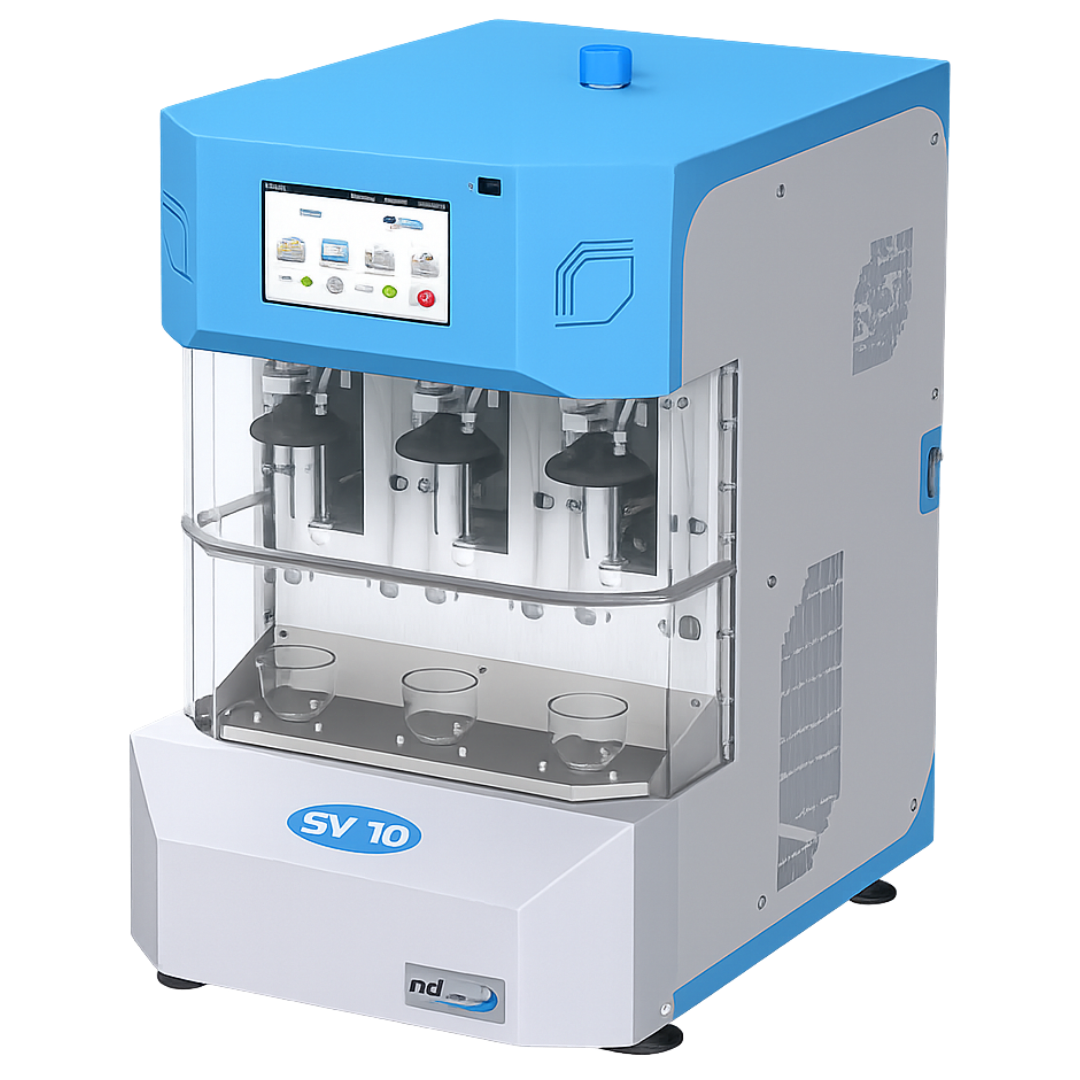
The SV10 is the world's first fully automated instrument compliant with ASTM D7157 for S-value measurement. No operator action is required during the test — toluene dilution, heptane titration, flocculation detection, and cleaning all run automatically across three simultaneous positions. Pre-loaded programs cover all sample types defined in ASTM D7157.
SV10 — Patented Temperature-Controlled Measuring Cell
The SV10's high-precision measuring cell is temperature-controlled throughout the test (15°C to 60°C) — a unique capability (patent pending) that significantly improves measurement precision for viscous samples. Combined with automated toluene dilution up to 100°C and three-position parallel testing, the SV10 delivers a major improvement in accuracy, repeatability, and test duration over any manual S-value method.
SV10 — Zero Solvent Exposure
Handling toluene and heptane manually is the primary safety risk in the ASTM D7157 procedure. The SV10 eliminates direct operator contact with both solvents entirely — all solvent operations are enclosed and automated. This is not a partial improvement; the SV10 eliminates all safety risks linked to manual hazardous solvent manipulation.
ST10 — Fully Portable, Self-Contained, No Training Required
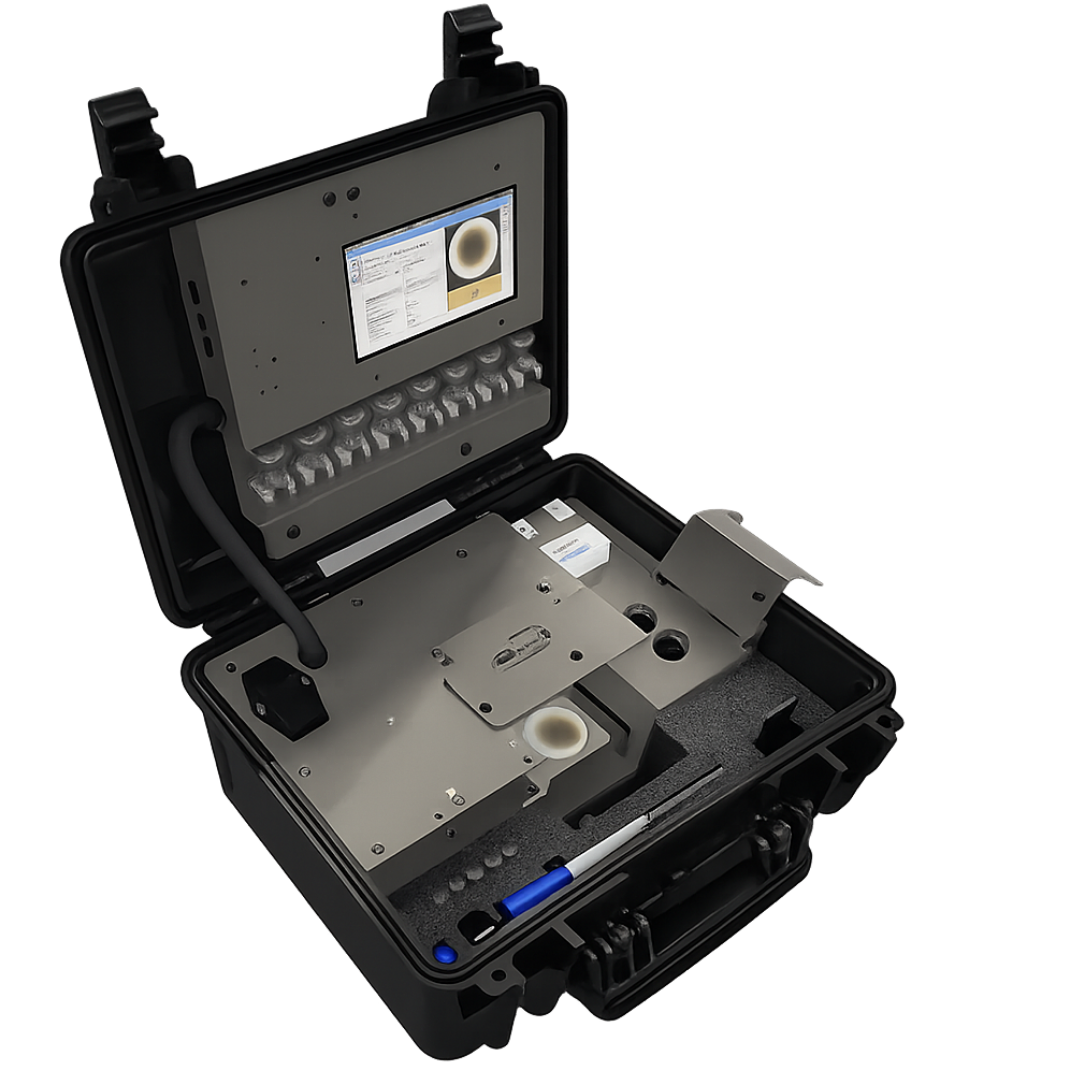
The ST10 is a patented portable automated ASTM D4740 system built into a carrying case — the entire test apparatus, built-in oven, CCD camera, computer, software, and result database travels in a single case. It can be operated by untrained personnel wherever power is available. On a vessel at sea, at a terminal bunker point, at a refinery loading rack — the ST10 gives field operators access to a test that previously required a fixed laboratory.
DT100DL — Only Instrument That Simultaneously Measures Dispersancy and Soot
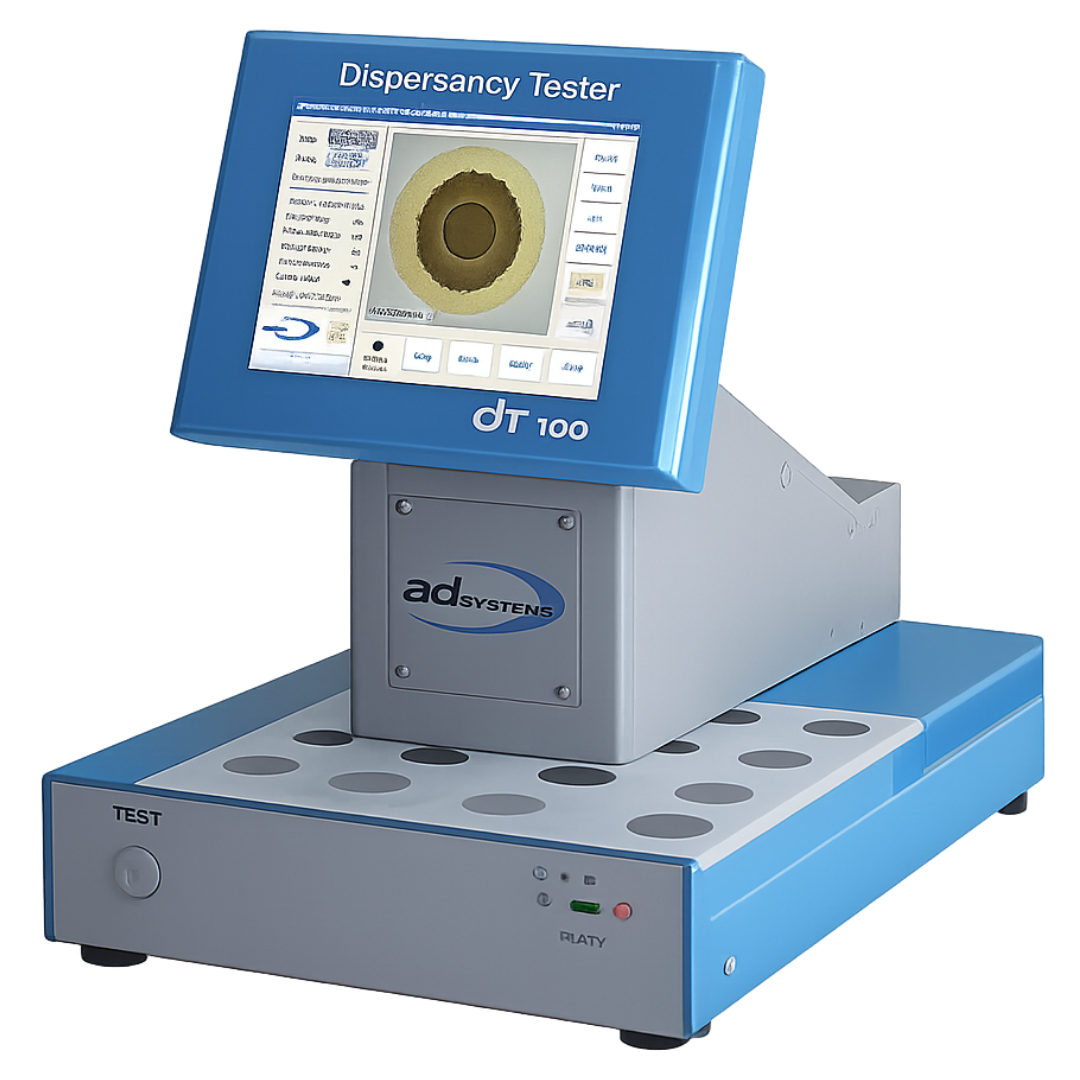
The DT100DL is the only instrument that simultaneously and automatically quantifies both the dispersancy (MD) and contamination index (IC) of in-service diesel engine oil in a single spot test per ASTM D7899. The combined performance rating (DP) — a mathematical combination of both — gives maintenance teams a single number that tracks oil degradation trajectory over time and flags when corrective action is needed before engine damage occurs.
All Three — Fully Documented, Traceable Results
Every result from the SV10, ST10, and DT100DL is stored in a built-in database with full test conditions, operator ID, sample ID, date and time, and instrument serial number. Results can be exported to LIMS via Ethernet or USB. Reports can be printed or exported in Excel or text format. Every test is traceable from the moment it is initiated.
ASTM Method Compliance
Standard Test Method for Determination of Intrinsic Stability of Asphaltene-Containing Residues, Heavy Fuel Oils, and Crude Oils (n-Heptane Phase Titration)
Measures the S-value — the intrinsic stability of asphaltenes in oil — by automated toluene dilution and heptane titration. Reports S-value, Sa (peptizability of asphaltene), So (peptizing power of oil), Xmin (minimum heptane consumption to reach flocculation), FRmax (maximum flocculation ratio), and R2. The SV10 is the first fully automated instrument worldwide compliant with this method.
The SV10 also supports ISO PAS 23263 and CIMAC guidelines for asphaltene stability testing of marine fuels
Directly applicable to VLSFO and ULSFO blending compatibility assessment in marine and bunkering operations.
Standard Test Method for Cleanliness and Compatibility of Residual Fuels by Spot Test
A spot test method that rates the compatibility and cleanliness of residual fuel oil and distillate fuels on a 1 to 5 scale. Rating 1 is compatible/clean; rating 5 is incompatible/heavily contaminated. The ST10 automates all phases — sample conditioning, spot preparation, drying, camera imaging, binarization, and rating — producing a fully automated ASTM D4740 result with accuracy less than one rating step.
Standard Test Method for Measuring the Merit of Dispersancy of In-Service Engine Oils with the Blotter Spot Method
A spot test method evaluating the dispersancy and soot contamination of in-service diesel engine oils. The DT100DL automates the spot imaging and analysis, simultaneously measuring dispersancy (MD: 100 = ideal, 0 = no dispersancy), contamination index (IC: 0.1% to 5%), and combined performance rating (DP: 0 = good, 200 = very poor).
SV10 — Automated S-value / Intrinsic Stability of Asphaltenes
For crude oils, residues, heavy fuel oils, and marine fuels. The SV10 is the first fully automated ASTM D7157 instrument — measuring asphaltene stability across three positions simultaneously with no operator action during the test and no direct solvent contact.
3 simultaneous test positions — run in parallel, unattended
Fully automated: toluene dilution (up to 100°C), heptane titration, cleaning
Patented temperature-controlled high-precision measuring cell (15°C to 60°C)
Zero operator contact with toluene or heptane during the test
Low asphaltene level capability — detects as low as <0.4% asphaltene content
Pre-loaded programs for all ASTM D7157 sample types — no setup expertise required
S-value range: 1.05 to 15.00, resolution 0.01
Reports: S-value, Sa, So, Xmin, FRmax, R2, titration graph
Typical test time: 20 minutes
Results storage: up to 100,000 results (8 GB database), USB, LAN
Interface: 7″ full-color touch screen
Dimensions: 440 x 620 x 700 mm (17″ x 24″ x 28″)
Weight: 55 kg (110 lbs)
Power: 100/240 V — 50/60 Hz — 750 W
Part No. AA410-001 — Delivered ready for operation
ST10 — On-site Residual Fuel Compatibility Tester
For vessel operators, refineries, terminals, and field use. The ST10 is a fully portable, self-contained automated ASTM D4740 spot tester — the entire system in a carrying case, operable by untrained personnel wherever power is available.
Complete automated system in a portable carrying case — for on-board and lab use
Fully automated ASTM D4740 procedure — fuel conditioning, spot preparation, drying, imaging, rating
No analytical training or knowledge required to operate
No solvents — eliminates chemical handling entirely
Built-in oven: 100°C filter paper / 93°C fuel, resolution 0.1°C, precision ±0.2°C
CCD camera automatically images spot after drying phase
Software binarizes image and outputs ASTM D4740 rating 1–5 automatically
Rating accuracy: less than one rating step
Programmable for Fuel Compatibility or Fuel Cleanliness test mode
Results storage: up to 100,000 results including spot image
Sample heating and drying time: per D4740 or programmable
Interface: 7″ capacitive touch screen (155 x 86 mm, 800 x 480 px)
Dimensions: 420 x 350 x 222 mm (16.5″ x 14″ x 8.5″)
Weight: 9 kg (20 lbs)
Power: 115–230 V — 2A — 50/60 Hz
Part No. AA120-001 — Delivered ready for operation
Includes: micropipette, 100 filter papers, 5 filter paper supports, built-in oven, CCD camera, computer, software, result database
DT100DL — Dispersancy Tester of In-Service Engine Oils
For OCM programs, engine test labs, and fleet maintenance. The DT100DL is the only instrument that simultaneously and automatically measures both dispersancy and soot contamination of in-service diesel engine oil in a single ASTM D7899 spot test.
Only instrument to simultaneously quantify dispersancy (MD) and contamination index (IC)
Combined Performance Rating (DP) = mathematical combination of IC and MD — tracks oil degradation trend
Dispersancy (MD): 100 (good/ideal) to 0 (no dispersancy)
Contamination index (IC): 0.1% to 5%
Combined Performance Rating (DP): 0 (good) to 200 (very poor)
Color CCD camera — dual lighting (backlight and front light LED panels)
Spot analysis in seconds per spot — max spot diameter up to 45 mm
Spot image stored: B&W in backlight + color in front light
On-site calibration in minutes using supplied calibration tool
Results exported in Excel or text format to LIMS via Ethernet or USB
Results storage: unlimited — depends on external USB storage device capacity
Imaging system calibration tool delivered with unit
Dimensions: 305 x 487 x 390 mm
Weight: 20 kg
Power: 115–230 V — 2A — 50/60 Hz
Part No. AA110-002 — Delivered with 100 filter papers, 5 filter paper supports, calibration kit, user manual
Streamline Your Workflow from
Bath to Result
The TO10 and DR10 are designed to operate as one integrated system. The TO10 runs the full ASTM D3241 thermal oxidation test. At test completion, results are automatically transferred from the TO10 to the DR10 via Ethernet. The DR10 measures the tube deposit and delivers a complete, SI-unit result with 3D mapping in 12 minutes. No manual data transfer. No operator rating step. No subjectivity at any point in the workflow.
Specifications
SV10 — Automated S-value Analyzer (Part No. AA410-001)
Run three asphaltene stability tests simultaneously, fully unattended, with no direct operator contact with toluene or heptane at any point in the test cycle.
Test methods
Printing
100/240 V — 50/60 Hz — 750 W
ST10 — On-site Fuel Compatibility Tester (Part No. AA120-001)
Portable, self-contained, and operable by untrained personnel — on board a vessel, at a terminal, or in a fixed lab. No solvents, no training, no analyst required.
Test methods
Dimensions
420 x 350 x 222 mm (16.5″ x 14″ x 8.5″)
DT100DL — Dispersancy Tester (Part No. AA110-002)
The only instrument that simultaneously quantifies both dispersancy (MD) and soot contamination index (IC) of in-service engine oil — delivering the Combined Performance Rating (DP) that tracks degradation before it reaches the engine.
Test methods
Data output
2 x USB, LAN via Ethernet RJ45, optional printer
Who Uses the SV10, ST10 & DT100DL
Petroleum Refineries & Heavy Fuel Blenders
The SV10 is the instrument of choice for refineries blending crude oils, residues, and heavy fuel oils where asphaltene flocculation risk during processing, storage, or transportation is a commercial and operational concern. S-value and Sa/So data enables refiners and blenders to predict compatibility before blending and optimise distillation, visbreaking, and hydrocracking operations.
Marine Fuel & Bunkering Operations
Both the SV10 and ST10 address marine fuel quality directly. The SV10 measures asphaltene stability of VLSFO and ULSFO per ISO PAS 23263 and CIMAC guidelines — critical for compatibility assessment when bunker fuels from different sources are blended. The ST10 tests residual fuel compatibility and cleanliness per ASTM D4740 on board vessels, at bunker terminals, and at bunkering facilities.
Fleet Maintenance & Oil Condition Monitoring Programs
The DT100DL is built for OCM programs monitoring in-service diesel engine oil across vehicle fleets, construction equipment, marine engines, and power generation units. Regular spot testing tracks dispersancy and soot load over oil service intervals — providing the trend data that identifies deteriorating oil before it causes engine damage or unplanned downtime.
Vessel Operators & On-board Laboratories
The ST10's portable, self-contained design is purpose-built for shipboard use. Vessel operators can test bunker fuel compatibility and cleanliness on board using the ST10 without a fixed laboratory or trained chemist — the instrument guides the operator through every step and stores a fully documented result.
Pipeline, Terminal & Crude Oil Trading Labs
S-value data from the SV10 supports crude oil custody transfer — quantifying the flocculation risk of crude oil cargoes before pipeline injection, terminal blending, or refinery receipt. Low S-value crudes that would cause asphaltene deposition in pipelines or tank bottoms are identified before the problem occurs.
Engine Test Labs & Lubricant R&D
The DT100DL provides engine test laboratories and lubricant development teams with quantitative dispersancy data at a fraction of the cost and time of full bench engine tests. Development of dispersant additive packages and oil drain interval studies benefit from the DT100DL's ability to track oil condition across multiple time points with rapid, objective measurements.
Why Get the SV10, ST10 & DT100DL Through KB Scientific
Three things that set sourcing through KB Scientific apart from a general lab distributor without petroleum, lubricant, or marine fuel testing expertise.
Advised by a Former Lab Manager
Kevin Batt has managed petroleum and lubricant testing labs where asphaltene stability, fuel compatibility, and oil condition monitoring are part of the routine test program. He can advise which of the three instruments fits your application — and whether more than one belongs in your workflow.
Authorized AD Systems Representative
KB Scientific is an authorized representative for AD Systems in the Midwest — not a general reseller. Direct manufacturer relationship means accurate technical guidance, correct configuration recommendations, and clear accountability for post-installation support.
Local Midwest Support
Based in Fishers, Indiana, serving 10 states. Kevin is reachable by phone or email for pre-sale application guidance, instrument selection, and post-delivery support. Not a national distributor support queue.
Frequently Asked
Questions
What petroleum lab managers, marine fuel operators, and engine oil QC teams ask most often about the AD Systems SV10, ST10, and DT100DL.
What is the S-value and why does it matter for crude oils and heavy fuels?
The S-value is a measure of the intrinsic stability of asphaltenes in an oil — how well the oil’s own molecular structure keeps asphaltenes dispersed in suspension. A low S-value means the asphaltenes are close to flocculation — they will precipitate out of suspension when the oil is stressed, heated, stored for extended periods, or blended with another oil. In practical terms, a low S-value crude or heavy fuel oil is a risk for asphaltene deposits in pipelines, heat exchangers, and storage tanks. The SV10 measures the S-value and reports it as a precise number from 1.05 to 15.00, replacing a qualitative visual judgement with a quantitative, traceable measurement.
Can the ST10 be used on board a ship at sea?
Yes — the ST10 was specifically designed for on-board shipboard use. The entire test system is contained in a portable carrying case that can be operated by untrained personnel wherever mains power is available. No solvents are required, no analytical training is needed, and the ST10 guides the operator through every step of the ASTM D4740 procedure. It is used routinely by vessel operators to test residual fuel compatibility and cleanliness at the point of bunkering.
What is the difference between dispersancy (MD) and contamination index (IC) in the DT100DL?
Dispersancy (MD) measures the oil’s remaining capacity to keep insoluble soot particles suspended — preventing them from agglomerating and depositing on engine surfaces. A high MD (close to 100) means the oil is still performing. A low MD means dispersancy additives are depleted. The contamination index (IC) measures how much insoluble material is already present in the oil — the soot load. Both matter: an oil with high soot load but good dispersancy is less dangerous than one with moderate soot but failing dispersancy. The DT100DL’s Combined Performance Rating (DP) combines both into a single degradation tracking number.
Does the SV10 require any operator involvement during the test?
Minimal. The operator weighs the sample, positions up to three samples in the SV10, closes the door, and initiates the test. From that point, the SV10 handles everything automatically — toluene dilution, heptane titration, flocculation detection, result computation, and cleaning. No operator action is needed during the test itself, and no application expertise is required to interpret the result — the SV10 computes and reports the S-value, Sa, So, Xmin, FRmax, and R2 automatically.
What sample types can the SV10 handle?
The SV10 is compatible with a wide range of asphaltene-containing samples: crude oils, atmospheric residues, vacuum residues, heavy fuel oils (HFO, HSFO), marine VLSFO and ULSFO, bitumens, emulsions, and refinery process streams including visbreaker bottoms and hydrocracker feeds. Pre-loaded programs for all sample types defined in ASTM D7157 are included — no configuration is required for standard applications.
What does the ST10 deliver with each test result?
Every ST10 result is stored with: sample type(s), sample ID(s), ASTM D4740 rating (1 to 5), date and time, operator name, comments, test conditions, instrument serial number, software version, and the spot image captured by the CCD camera at the time of rating. Results are stored in the built-in database (up to 100,000 results) and can be transmitted to LIMS via Ethernet or exported via USB.
Other Instruments You May Need
Not Sure Which Instrument
Fits Your Application?
Request a Quote or Technical Consultation
Kevin Batt Will review your corrosion testing methods, current workflow, and throughput requirements, and advise whether the SV10, ST10 or DT100DL, or all instruments fit your application. No sales script. No obligation.