
Lubricant & Crude Testing Baths — Carbonizable Substances, Sediment, Foaming & Oxidation Stability for Petroleum Laboratories
KB Scientific Instruments supplies the complete Tamson lubricant and crude oil testing line, covering carbonizable substances in white mineral oil and paraffin wax, sediment determination by membrane filtration and by centrifuge, foaming characteristics of lubricating oils, and oxidation stability of automotive transmission fluids under artificial ageing. Each bath or apparatus is purpose-built for its governing ASTM or CEC method, with the cover, glassware, and sample handling the method specifies. Identify the property being tested below to select the correct instrument for the laboratory.
Download Brochure
Purpose-Built Instruments for Lubricant and Crude Oil Quality Testing
Lubricant and crude oil testing laboratories run methods that characterize sample purity, sediment content, foaming tendency, and long-term oxidation performance under heat and aeration. Tamson builds a dedicated bath or apparatus for each of these methods rather than a single general-purpose unit, so the cover, glassware, and temperature range match what the governing ASTM or CEC standard specifies. Every bath uses a stainless steel construction with a mechanical resettable safety thermostat.
The line divides into three functional groups. Crude oil sediment and water testing covers sediment determination by membrane filtration and by the centrifuge method for water and sediment in fuel oils or crude oils. Lubricant oxidation and foaming testing covers foaming characteristics of lubricating oils and oxidation stability of automotive transmission fluids under artificial ageing. Compositional quality testing covers carbonizable substances in white mineral oil or paraffin wax for pharmaceutical-grade quality verification.
Refinery quality control laboratories, lubricant blenders, crude oil terminals, and independent testing labs across the Midwest rely on this instrument line for method-compliant, repeatable results. KB Scientific Instruments configures each unit with the correct cover, glassware, and accessory set for the specific test method a laboratory runs, so the instrument arrives ready to commission.
Built for Method-Compliant, Repeatable Lubricant & Crude Results
Shared TC16 Bath Platform Across Multiple Methods
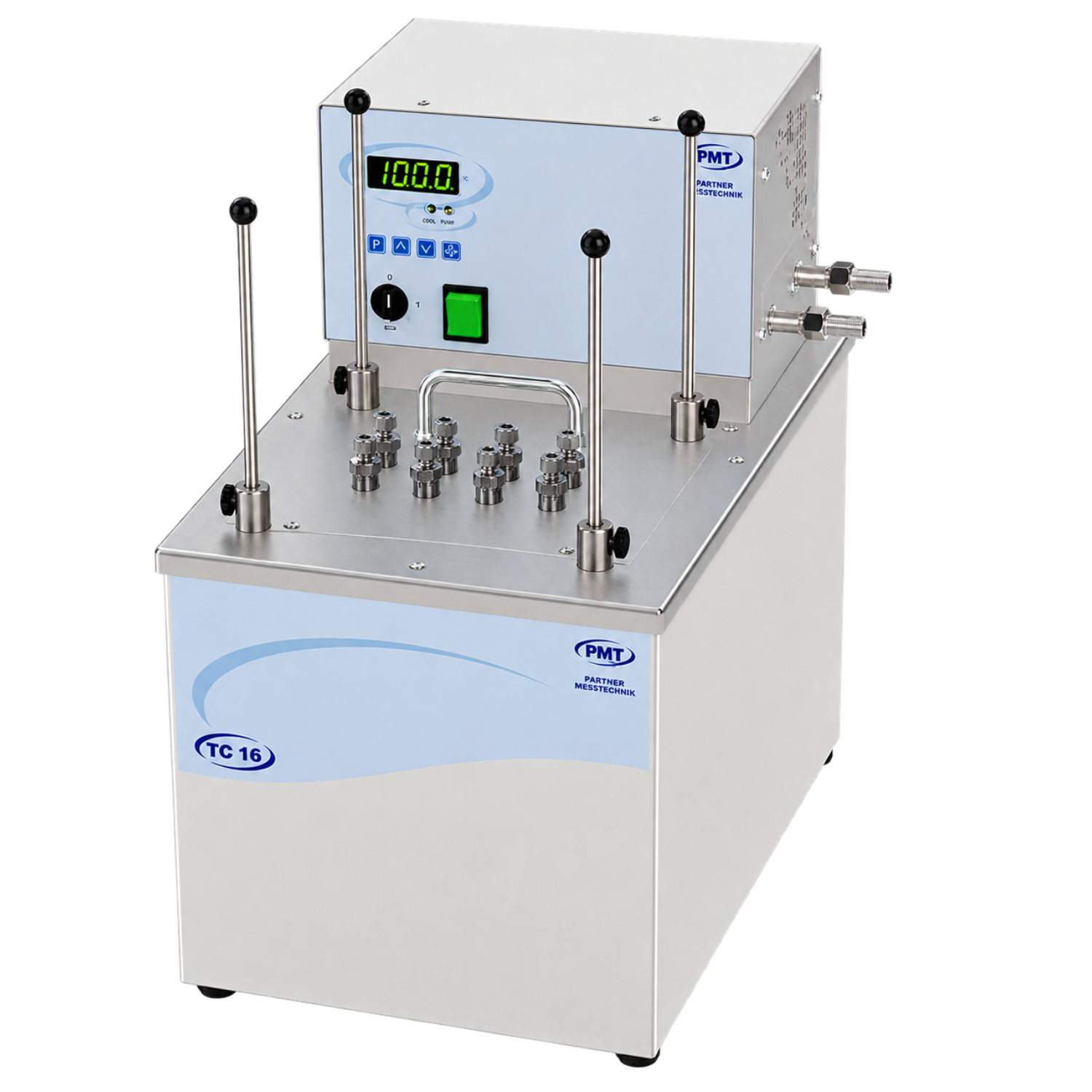
The TC16 bath used for carbonizable substances, membrane filtration sediment determination, and water and sediment centrifuge preheating shares the same stainless steel construction, 0.1° set-point resolution, and 0.01°C internal controller accuracy. Each configuration uses the cover, holder, or funnel arrangement its specific method requires, so laboratories running more than one of these methods can standardize on a familiar platform.
Full ASTM and CEC Method Compliance
The instrument line conforms to ASTM D565, D612, D4807, D892, D1796, D4007, and CEC L-48-00, along with related API, IP, and DIN standards. Each unit ships with the cover, glassware, and holder configuration its governing method specifies, removing the compliance risk of adapting a general-purpose bath to a method it was not built for.
Safer Sample Handling Design
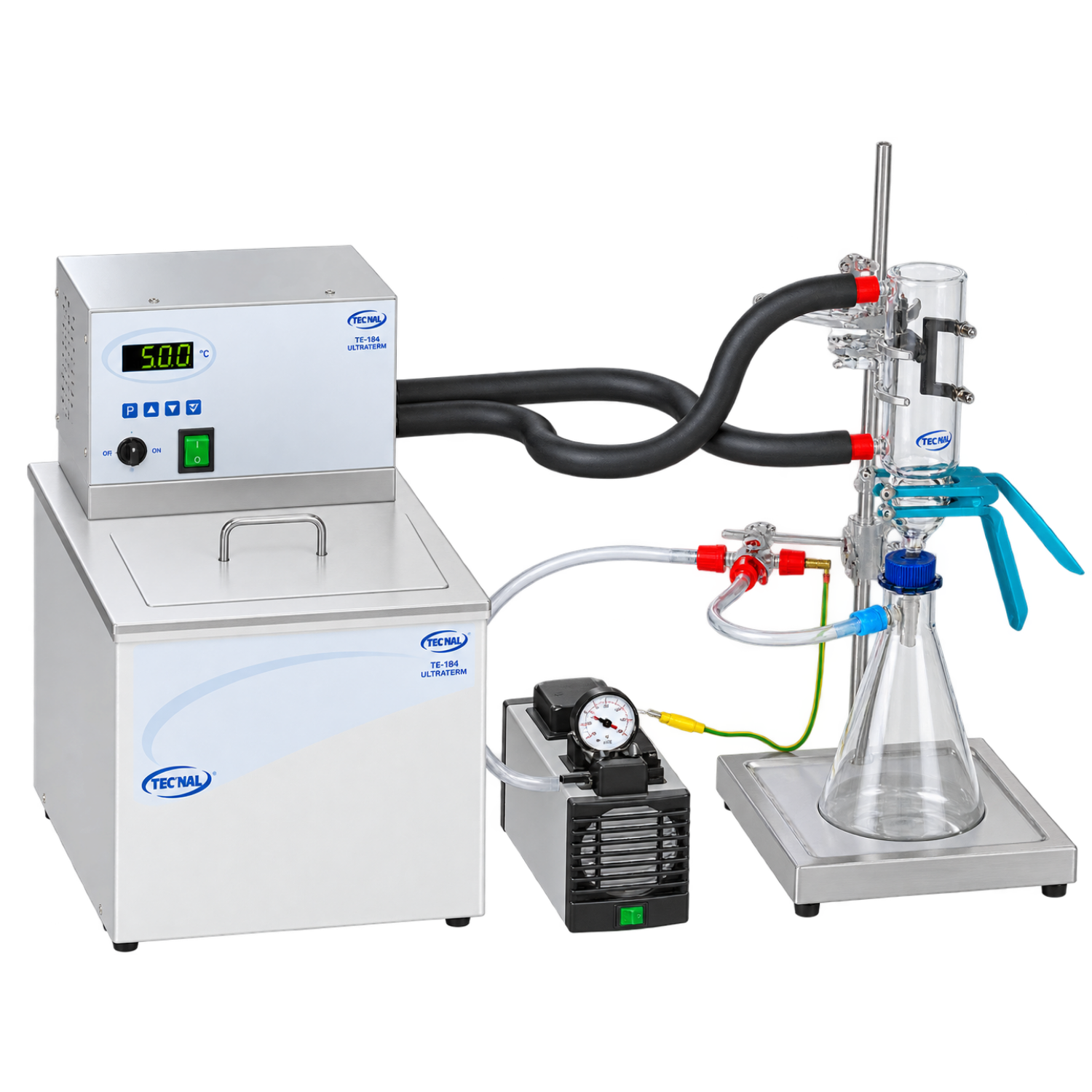
The ASTM D4807 apparatus uses a jacketed funnel instead of wired copper around a single-wall funnel, a significantly safer approach to preheating the sample during membrane filtration. The fully grounded system, including braided-wire grounding on the flask and sample, protects against static buildup during solvent-based crude oil filtration.
Dual-Bath Foaming Test Configuration
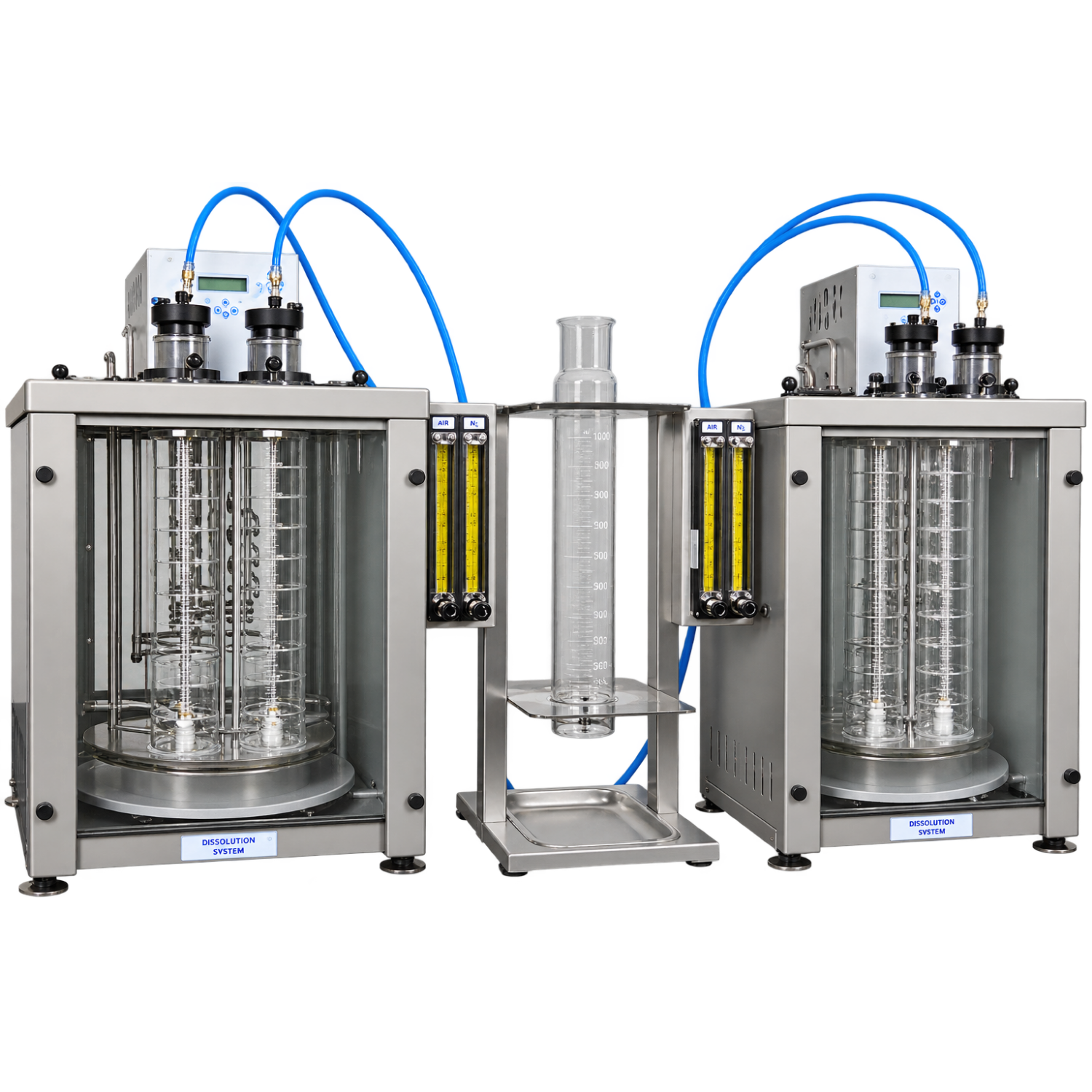
The Tamson Foaming Bath tests lubricating oil foaming tendency at both the 24°C and 93.5°C temperatures ASTM D892 requires, using two interchangeable baths in a single dual configuration. The included rack holds up to four foaming cylinders between test sequences, with an optional dryer tower and Digital Mass Flow Meter available for higher-throughput testing programs.
Automated Oxidation Testing with FTIR Evaluation Path
The CEC L-48-00 (B) apparatus heats and aerates lubricating oil samples under controlled conditions to assess resistance to high-temperature oxidation and sludging, with six complete glassware sets and a maintenance-free high-temperature pump included. Test evaluation pairs the apparatus with a kinematic viscosity bath and FTIR analysis per ASTM D7214 to quantify the Peak Area Increase in the carbonyl region.
Centrifuge-Compatible Preheating for Water & Sediment Testing
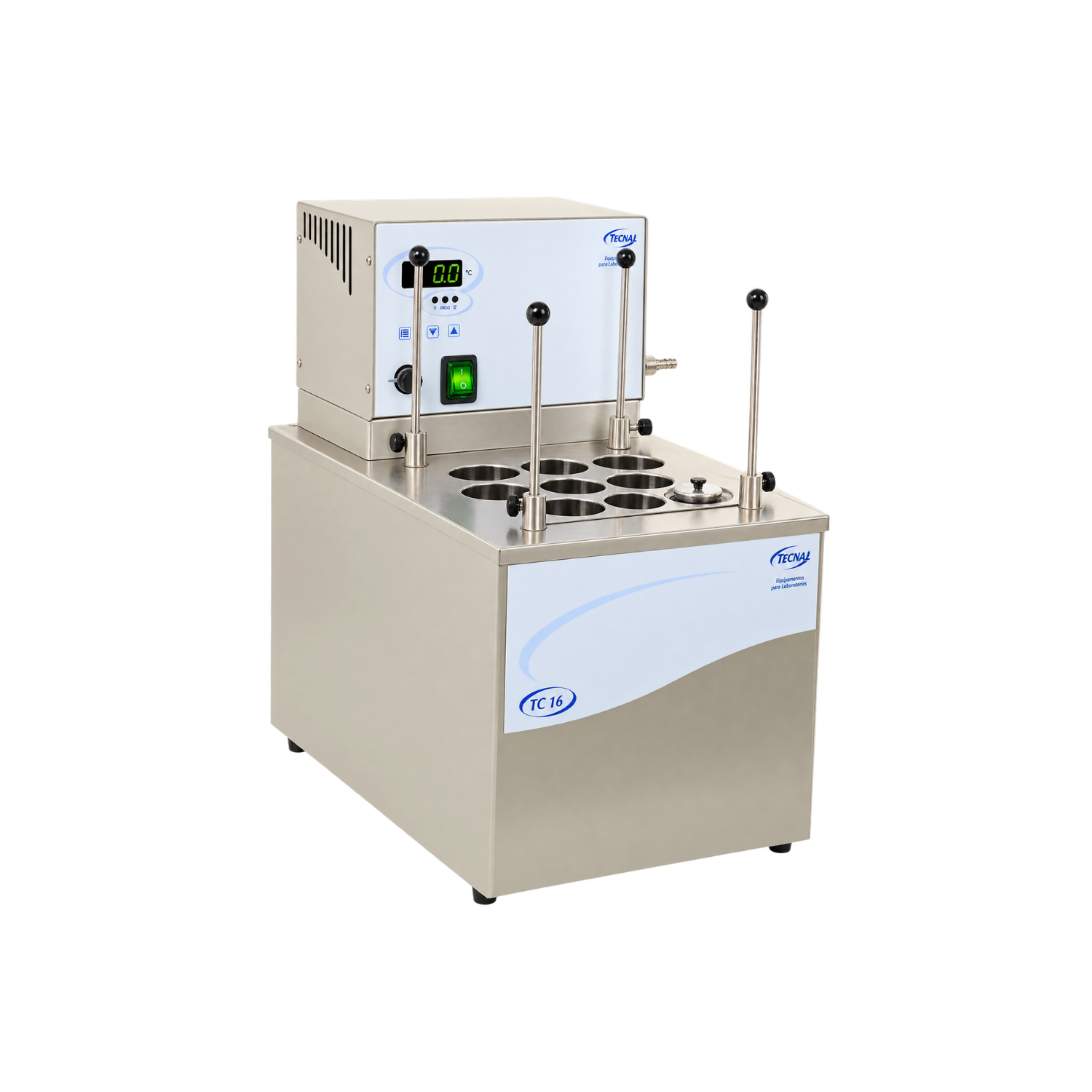
The TC16 configured for ASTM D1796 and D4007 preheats nine cone-shaped centrifuge tubes to the 100 mL mark using a levelling platform, matching the requirements of the centrifuge method for water and sediment in fuel oils or crude oils. The same bath platform supports ASTM D91, D96, and D2273 with the appropriate centrifuge tube accessories.
ASTM METHODS
Methods Supported by This Instrument Line
Carbonizable Substances in White Mineral Oil or Paraffin Wax
These methods determine whether a mineral oil or paraffin wax sample conforms to the standard quality required for pharmaceutical use as defined by the United States Pharmacopeia, National Formulary, or FDA. The sample is treated with concentrated sulfuric acid and heated, then the resulting color is compared against a reference standard.
Sediment Determination by Membrane Filtration in Crude Oil
This method covers the determination of sediment in crude oils by membrane filtration, validated for crude oils with sediments up to approximately 0.15 mass percent. The TC16 circulates heated silicon oil through a jacketed funnel to maintain the crude oil sample at 90°C during filtration.
Foaming Characteristics of Lubricating Oils
This method covers the determination of foaming characteristics of lubricating oils at 24°C and 93.5°C, addressing foam-related failure risks in high-speed gearing, high-volume pumping, and splash lubrication systems. The Tamson dual foaming bath tests both temperatures with a shared rack and flowmeter system.
Determination of Water and Sediment in Fuel Oils or Crude Oils
These methods cover the determination of water and sediment in fuel oils or crude oils by the centrifuge method, where a water bath preheats cone-shaped centrifuge tubes before spinning. The TC16 accommodates nine centrifuge tubes with a levelling platform to the 100 mL mark these methods prescribe.
Oxidation Stability of Lubricating Oils Used in Automotive Transmissions by Artificial Ageing
This method assesses the resistance of automotive transmission lubricants to high-temperature oxidation and their ability to resist degradation and sludging, heating and aerating the sample under controlled conditions. The TC40-based apparatus delivers a complete six-position test system with glassware, flowmeters, and a high-temperature pump.
Choose the Instrument for Your Test Method
The Tamson ASTM D4807 apparatus is designed for sediment determination
by membrane filtration in crude oil. Tamson supplies a complete apparatus including the TC16 circulator bath, jacketed funnel, filtering flask, vacuum pump, and stand. The jacketed funnel is significantly safer to use than wired copper around a single-wall funnel, and the entire system is fully grounded through the bath, support, clamp, and a braided wire on the flask.
Jacketed funnel maintains crude oil sample at 90°C
Complete apparatus includes vacuum pump and stand
Fully grounded system for static-safe filtration
Levelling platform and cover with rings to preheat toluene
Bath volume: 16 L
Range: Ambient +5°C to 250°C
Stability: ±0.02°C
Power: 1.8 kW
00T2010 (230V, 50-60Hz apparatus)
00T2011 (115V, 60Hz apparatus)
The TC16 ASTM D1796 bath is designed to preheat centrifuge cones as required
When determining water and sediment in fuel oils (ASTM D1796) or crude oils (ASTM D4007) by the centrifuge method. With the levelling platform and specially designed rack, nine 8-inch cone-shaped centrifuge tubes can be immersed to the 100 mL mark as the ASTM methods prescribe. The centrifuge itself is available separately.
Nine-position cone-shaped centrifuge tube rack
Levelling platform immerses tubes to the 100 mL mark
Supports ASTM D91, D96, D2273 with appropriate accessories
RS232 port for optional TamCom software
Bath volume: 16 L
Range: Ambient +5°C to 250°C
Stability: ±0.02°C
Power: 1.5 kW
00T0671 (230V, 50-60Hz)
00T0861 (115V, 60Hz)
The Tamson dual foaming bath tests foaming characteristics of lubricating oils
Conforming to ASTM D892, with two baths that can be interchangeably operated at 24°C and 93.5°C. The bath has four openings for foaming cylinders, and a rack with flowmeters is supplied to hold up to four foaming cylinders between test sequences II and III, with stoppers and an optional dryer.
Two interchangeable baths at 24°C and 93.5°C
Four foaming cylinder openings per bath
Rack with four calibrated flowmeters included
Optional Digital Mass Flow Meter and custom configurations available
Bath volume: up to 31 L per bath
Range: Ambient to 100°C
Stability: ±0.02°C
Power: 2.84 kW (230V) / 2.14 kW (115V)
00T0330 (230V, 50-60Hz)
00T0331 (115V, 60Hz)
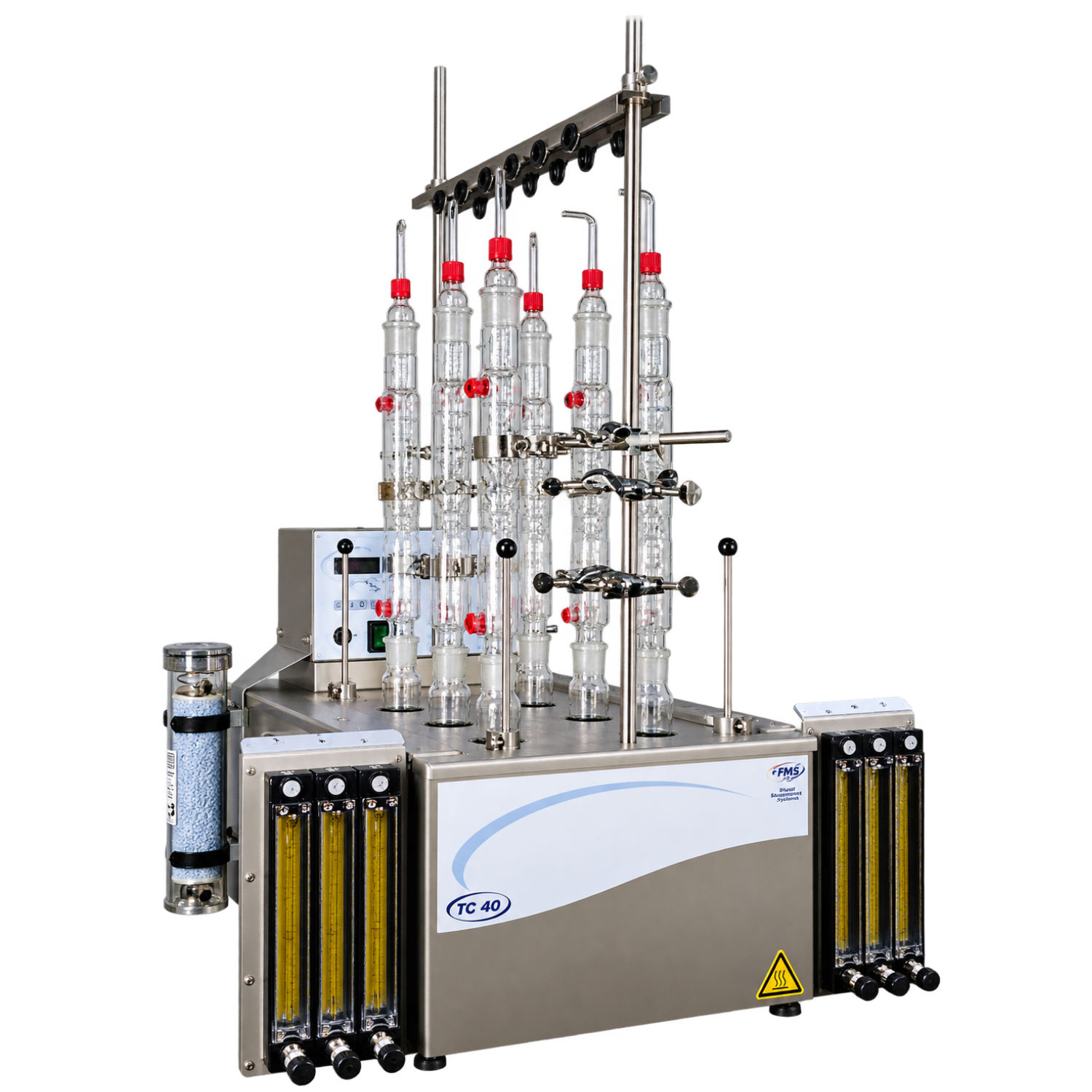
The Tamson CEC L-48-00 (B) apparatus is a six-position
40 L TC40 bath that includes the necessary accessories to perform tests according to CEC L-48-00 (B), including six flowmeters, six sets of glassware, stand-rods with clamps, and a maintenance-free pump designed to work at high temperatures. Test evaluation requires a kinematic viscosity bath and FTIR analysis per ASTM D7214 to quantify oxidation by Peak Area Increase.
Six-position TC40 circulator bath with complete glassware sets
Maintenance-free pump rated for high-temperature operation
Should be placed in a fume hood to avoid oil vapor spreading into the laboratory
Low liquid float included, switches off apparatus when bath fluid is too low
Bath volume: 40 L
Range: Ambient to 250°C
Stability: better than ±0.02°C
Power: 3.0 kW (230V) / 1.8 kW (115V)
00T2050 (230V, 50-60Hz)
00T2051 (115V, 60Hz)
The Tamson Filter Blocking Tendency tester is an automated instrument
Designed to test the Filter Blocking Tendency of distillate fuels including diesel, biodiesel, gas oil, gas turbine fuel, and kerosene, conforming to ASTM D2068 and IP 387. Fuel samples are drawn with a constant flow of 20 mL/min by a piston pump, with fluid level, pressure, and temperature continuously monitored while the sample is pumped through a specified filter.
Graphical touch screen with step-by-step guided operation
Integrated thermal printer for test records
Password-protected user and service screens
Procedures A and B both supported with standard adapter block
FBT range: 1.0 to 30 (low number is best)
Temperature accuracy: ±0.05°C
Max pressure: 1500 mBar
Power: 40 W, 85-264 Vac
00T0945
The Tamson TC16 is an excellent solution for heating samples
conforming to ASTM D565 and ASTM D612, verifying whether mineral oil or paraffin wax meets pharmaceutical-grade quality standards. The TC16 has eight positions for heating samples and a working temperature range from ambient +5°C to 250°C. A levelling platform and a special stainless steel cover with eight openings are needed to suspend the test tubes.
Eight test tube positions
RS232 port for optional TamCom software
Levelling platform and eight-opening cover required as accessories
Color comparator available for the required pass/fail comparison
Bath volume: 16 L
Range: Ambient +5°C to 250°C
Stability: ±0.02°C
Power: 1.5 kW
00T0671 (230V, 50-60Hz)
00T0861 (115V, 60Hz)
Specifications at a Glance
Range
Range
Range
The same TC16 platform, reconfigured with method-specific covers and accessories, supports carbonizable substances testing, membrane filtration sediment determination, and centrifuge preheating for water and sediment testing.
A complete six-position TC40 apparatus with glassware, flowmeters, and a high-temperature pump, purpose-built for artificial ageing of automotive transmission lubricants under controlled heat and aeration.
Stability
40 L
D565/D612 Carbonizable Substances
16 L
Who Uses This Instrument Line
Crude Oil Production & Terminal Operations
Crude oil terminals and gathering facilities use the D4807 membrane filtration apparatus and the D1796/D4007 centrifuge preheating bath to verify sediment and water content before custody transfer or pipeline injection. Both methods support the sediment specifications that govern crude oil quality acceptance at terminals.
Lubricant Blending & Manufacturing
Lubricant blenders use the D892 foaming characteristics bath and the CEC L-48-00 oxidation stability apparatus to verify finished lubricant products resist foaming and oxidative degradation under the operating conditions their formulations target. These two methods address failure modes that show up after a lubricant is already in service, making pre-shipment testing valuable.
Automotive Transmission Fluid Testing
Automotive transmission fluid formulators and testing labs use the CEC L-48-00 (B) apparatus specifically to assess resistance to high-temperature oxidation and sludging under artificial ageing conditions representative of transmission service. Paired with a Tamson kinematic viscosity bath and FTIR analysis, this provides a complete oxidation evaluation workflow.
Pharmaceutical-Grade Mineral Oil & Wax Suppliers
Suppliers of white mineral oil and paraffin wax for pharmaceutical use rely on the D565 and D612 carbonizable substances test to verify their products meet United States Pharmacopeia, National Formulary, or FDA quality requirements. This compositional test is often a release specification for pharmaceutical-grade excipient oils and waxes.
Refinery Quality Control Laboratories
Refinery QC labs use the full instrument line across crude intake testing, in-process lubricant quality checks, and finished product verification, benefiting from the shared TC16 platform across three of the five methods. This reduces the equipment footprint needed to cover sediment, compositional, and centrifuge preheating testing.
Independent Petroleum Testing Laboratories
Independent labs serving multiple refinery and lubricant manufacturer clients use this instrument line to offer a broad testing menu without a proportional increase in floor space, since the TC16 and TC40 platforms are shared across several methods with method-specific accessory sets.
Your Authorized Tamson Partner in the Midwest
Three things that set sourcing this instrument line through KB Scientific apart from buying direct or through a general lab equipment distributor with no lubricant or crude testing background.
Authorized Tamson Representative
As an authorized Tamson representative, KB Scientific Instruments maintains a direct line to Tamson engineering and factory support for technical questions, warranty issues, and parts availability across all five instruments in this line. Customers get manufacturer-backed answers without navigating an overseas support channel directly.
Method-Matched Configuration Guidance
Every inquiry starts with identifying the governing ASTM or CEC method and the sample type a laboratory tests, since several of these instruments share a base TC16 or TC40 bath platform but require different covers, holders, and glassware. KB Scientific recommends the specific configuration that matches those requirements rather than a generic catalog listing, reducing the risk of ordering equipment that arrives incomplete for the intended test.
Local Midwest Support
Being Midwest-based allows KB Scientific to support installation, commissioning, and ongoing accessory ordering without the delays of cross-country or international service scheduling. Laboratories running crude oil sediment or lubricant oxidation testing programs get a local point of contact for troubleshooting and replacement consumables like membrane filters, foaming cylinders, and glassware sets.
Frequently Asked
Questions
What refinery QC analysts, lubricant blenders, and crude oil terminal operators ask most often about this instrument line.
Can the same TC16 bath be used for carbonizable substances, membrane filtration, and centrifuge preheating?
Yes, the TC16 bath platform is shared across the D565/D612 carbonizable substances test, the D4807 membrane filtration apparatus, and the D1796/D4007 centrifuge preheating bath. Switching between these methods involves changing the cover, holder, or funnel arrangement rather than purchasing a separate bath for each test. This is why many laboratories running more than one of these methods standardize on TC16 units and simply order the appropriate accessory set for each application. The base bath specifications, including 0.02°C stability and the ambient to 250°C range, are identical across all three configurations.
What makes the D4807 jacketed funnel safer than a traditional single-wall funnel setup?
Traditional membrane filtration setups for crude oil sediment testing often use wired copper wrapped around a single-wall funnel to maintain sample temperature during filtration, which introduces both a burn risk and inconsistent heating. The Tamson D4807 apparatus instead uses a jacketed, double-wall funnel through which heated silicon oil circulates directly from the TC16 bath, maintaining the crude oil sample at a consistent 90°C without any exposed heating element. The entire system is also fully grounded, including a braided wire that grounds the flask and sample in the vacuum filtering flask, reducing static ignition risk when filtering flammable crude oil samples.
Does the D892 foaming bath need to run two separate physical baths?
The standard Tamson Foaming Bath ships as a dual configuration with two physical baths that can be interchangeably operated at 24°C and 93.5°C, the two temperatures ASTM D892 requires for sequence testing. A single-bath configuration is also available for laboratories that only need one temperature at a time, and custom configurations can be built on request. The dual configuration is generally more efficient for laboratories running the full ASTM D892 sequence regularly, since both temperature points are available without re-equilibrating a single bath between tests.
What additional instruments are needed to complete a CEC L-48-00 (B) oxidation test?
The CEC L-48-00 (B) apparatus provides the six-position TC40 bath and glassware for the heating and aeration portion of the test, but full test evaluation requires two additional pieces of equipment. One instrument determines the kinematic viscosity of the aged sample, which Tamson also manufactures as part of its TV series viscosity bath line. The degree of oxidation itself is measured by FTIR in accordance with ASTM D7214, which quantifies the Peak Area Increase in the carbonyl region. Contact KB Scientific for guidance on pairing the correct viscosity bath with the CEC L-48-00 apparatus for a complete workflow.
How many centrifuge tubes does the water and sediment bath accommodate, and does it include the centrifuge?
The TC16 configured for ASTM D1796 and D4007 accommodates nine 8-inch cone-shaped centrifuge tubes, immersed to the 100 mL mark using the levelling platform accessory these methods require. The bath itself only preheats the tubes; the centrifuge used to spin the samples is offered as a separate option, referenced on the specification sheet for ASTM D91. Laboratories already running a compatible centrifuge for other test methods often only need the TC16 preheating bath and the appropriate tube accessories to add D1796 or D4007 testing.
Is a color comparator required for the D565/D612 carbonizable substances test, and is it included?
Yes, ASTM D565 and D612 both require comparing the color of the treated sample against a reference standard using a color comparator, and this accessory is not included with the base TC16 apparatus. KB Scientific can supply the appropriate color comparator alongside the bath, levelling platform, and eight-position cover needed for a complete D565/D612 test setup. Ask about the color comparator specifically when configuring this instrument, since it is easy to overlook when ordering the bath alone.
Other Instruments You May Need
Confirm the Right Instrument for
Your Test Method
Request a Quote or Technical Consultation
With five instruments spanning three lubricant and crude oil test categories, the fastest path to the correct configuration is a short conversation about the test method, sample type, and any related instruments already in use in the laboratory. KB Scientific Instruments will confirm the matching bath, cover, and accessory combination and provide a formal quote covering the complete configuration.